

*This post may contain affiliate links for which I earn commissions.*
When you’re past 40, starting an online business comes with a very specific kind of pressure.
You want to make a smart choice, not a trendy one.
And you definitely don’t want to waste years chasing a niche that sounds good on paper but leaves you bored, confused, or quietly regretting the whole thing three weeks later.
That’s why choosing a niche is not about finding the “perfect” topic.
It’s about finding a topic you can keep showing up for.
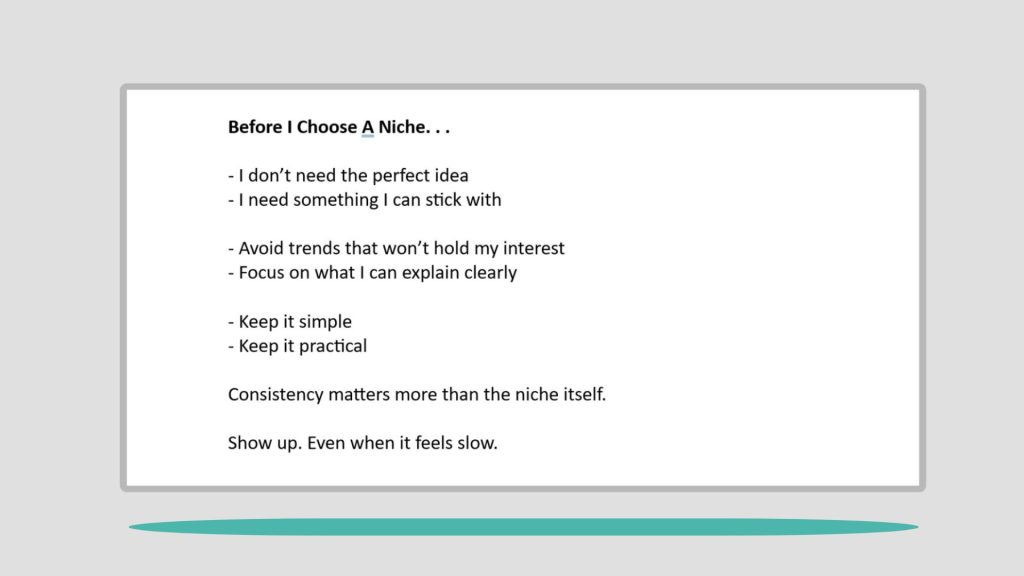
Even when life gets busy, motivation dips, and results are slower than you expected. (And yes, they will be slower than you think.)
For midlife beginners, that matters more than almost anything else.
You don’t need a flashy brand idea or a lifelong passion.
But you do need a niche that fits your experience, your interests, your patience level, and your business goals. Something you can build around without tech overwhelm or burnout.
One small thing that often gets overlooked here is consistency. Most people don’t quit because they chose the wrong niche. They quit because they stop showing up. If you already know that staying consistent might be a challenge, having some form of accountability in place can make a bigger difference than the niche itself.
How To Choose A Niche After 40
Choosing a niche after 40 means picking a topic that fits your experience, patience level, and lifestyle. Focus on what you already know, make sure there is a clear way to earn from it, and choose something you can stay consistent with long-term. The best niche is one you can stick with, not just one that looks profitable.
What Is A Niche In Online Business?
A niche is a specific topic or audience you focus on in your online business. Instead of trying to reach everyone, you create content and offers for a clearly defined group of people with specific needs or problems.
Start With What You Already Know (Best Niche Ideas After 40)
A good niche rarely comes from a big, dazzling revelation.
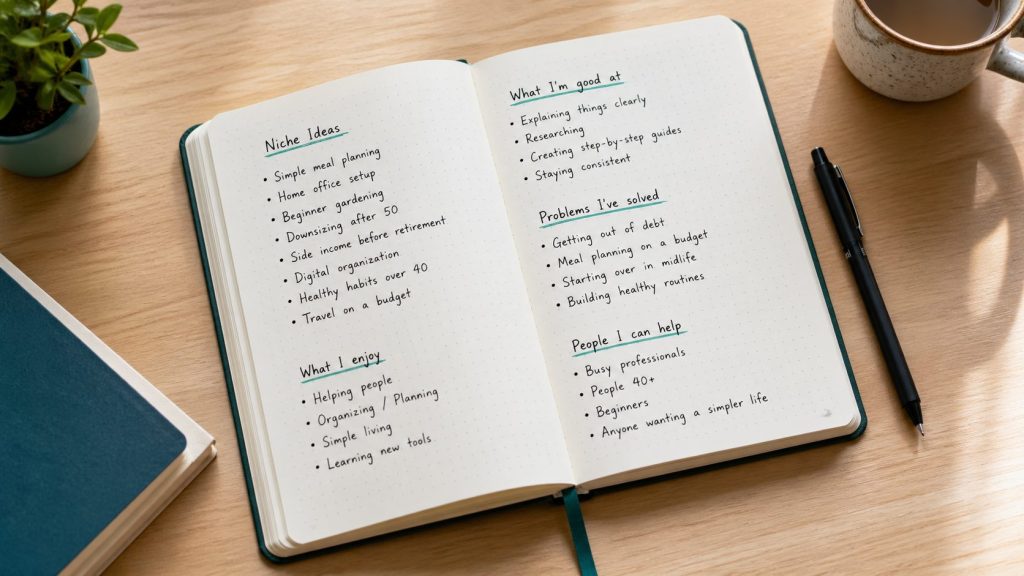
More often, it comes from your everyday life. Your work history, hobbies, or problems you’ve already solved.
If you’ve spent 20 years in human resources, that matters.
If you’re the person friends call when they need help organizing paperwork, comparing tools, planning meals, or figuring out retirement basics, that matters too.
Experience creates perspective. And perspective is valuable in business.
Many beginners make the mistake of looking outside themselves first.
They search for “best niches” and end up staring at lists full of ideas like crypto, luxury travel, or software reviews, then wonder why nothing feels like a fit.
A better starting question is simpler:
What do I know well enough to explain clearly to someone else?
You don’t need to be an expert. You just need to stay curious and useful.
A niche becomes easier to stick with when it connects to something real. Think work experience you’ve built up, a hobby you’ve spent years on, a personal challenge you’ve actually worked through, a skill people ask you about regularly, or a stage of life you understand from the inside. Those are the ones that hold.
For example, someone in their 50s might build a site around downsizing, simple meal planning, beginner gardening, or side income before retirement.
None of these are flashy. But all of them can become helpful, trustworthy, and profitable businesses.
A quick personal note: I once started a site about baby products before I even had a child. It made money. But I had zero interest in the topic.
Content creation and promotion became a grind. Looking back, I would have been far better off choosing something aligned with my actual experience.
Choose A Niche That Matches Your Time, Energy, And Patience
This part gets overlooked, and it matters a lot.
Some niches sound exciting. . . until you realize what it takes to create content for them.
A niche might have strong income potential. But if it demands constant trend-chasing, heavy research, daily posting, or endless social media activity, it may not fit your life.
Be honest with yourself:
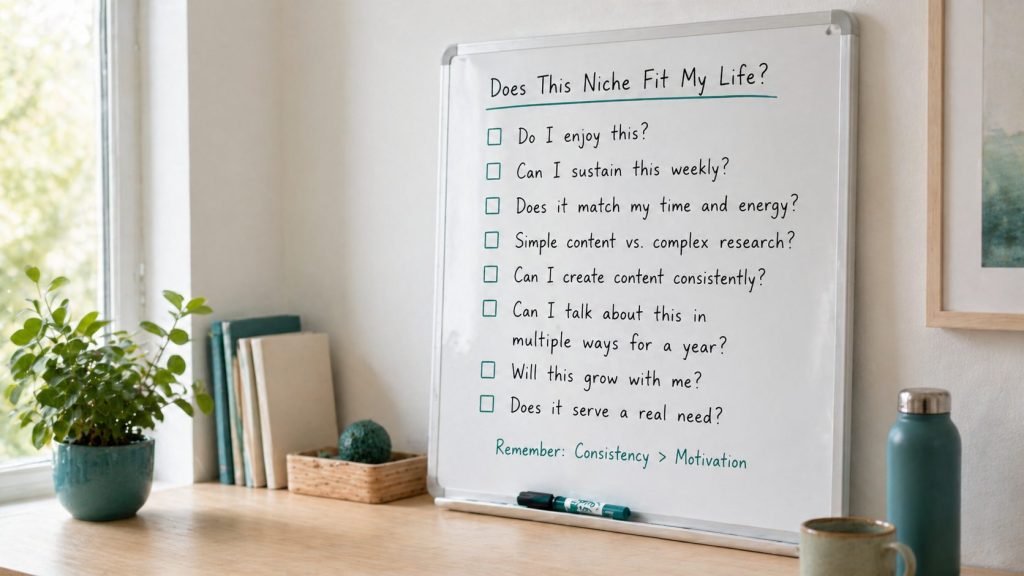
- Do you enjoy digging into details?
- Do you prefer simple, practical how-to content?
- Can you talk about one topic from multiple angles for a year?
- Or do you get bored quickly?
A good niche is one you can realistically maintain.
For example:
- If you like teaching, a how-to niche works well
- If you enjoy comparing, a review/recommendation niche fits
- If you simplify complexity, beginner-focused content is ideal
- If you get bored easily, choose a broader niche with variety
Let’s say you’re interested in “healthy living.”
That’s too broad.
But something like “simple fitness for adults over 50” or “easy meal prep for busy empty nesters” gives you a clear direction and audience.
The goal is not to pick the most profitable niche.
The goal is to pick one you can stick with long enough to succeed.
And this is where things quietly fall apart for many beginners. Not because the idea was wrong, but because execution became inconsistent. Even a simple structure where someone checks in on your progress each week can help you follow through when motivation dips.
How To Choose A Profitable Niche (Without Overcomplicating It)
Enjoying your niche is important, But it’s not enough on its own.
Your niche also needs a clear path to income.

This is where many beginners get stuck.
They either choose something they love with no monetization path, or choose something profitable that they don’t enjoy. In reality, the sweet spot is in the middle.
Ask yourself:
- Are there products I can recommend as an affiliate?
- Could this lead to a simple digital (or physical) product?
- Do people search for help, comparisons, or step-by-step guidance here?
- Can I create consistent content in this niche?
For example:
- A home office niche: desks, chairs, tools, software
- A meal planning niche: planners, templates, digital guides
You don’t need a complicated business model. Simple is actually better when you’re starting out.
Google Trends is a very useful tool here. It helps you validate whether interest in your topic is growing, stable, or declining, without needing expensive tools.
What Makes A Good Niche vs A Bad Niche
Good niche:
- Based on your experience
- Has clear monetization options
- Solves real problems
- Allows consistent content
Bad niche:
- Chosen only for trends
- No clear income path
- You have no interest in it
- Hard to sustain long-term
Choose A Niche You Can Stick With Long-Term (Without Burnout)
You don’t need to be wildly passionate about your niche, like some folks seem to think (I guess from listening to all the “guru” type people out there!) That advice sounds nice, but often leads to overthinking.
What you need is a niche you respect enough to keep learning about. A niche you wouldn’t mind writing about for the next couple of years.
Think about the reality. You’ll be writing guides, answering questions, reviewing tools, and updating content. That’s the work.
So ask yourself:
Can I still see myself doing this six months from now?
A sustainable niche needs to check a few basic boxes. You should know enough to start. It should have room to grow over time. And it should be built around real people with real problems, not just a trend you stumbled across.
That last one is key. When your niche serves a real audience, content becomes easier, and more meaningful. And usually, more profitable too.
Steps To Choose A Niche After 40
- List topics based on your experience and interests
- Check if people search for help in that niche
- Confirm there are products or services to promote
- Make sure you can create consistent content
- Test your top ideas with 10 content topics each
A Simple Way To Choose The Right Niche (Step-by-Step)
Step 1: List 5 Niche Ideas
Write down ideas based on your experience and interests.
Step 2: Score Each Idea (1–5)
Here’s a simple way to score your ideas:
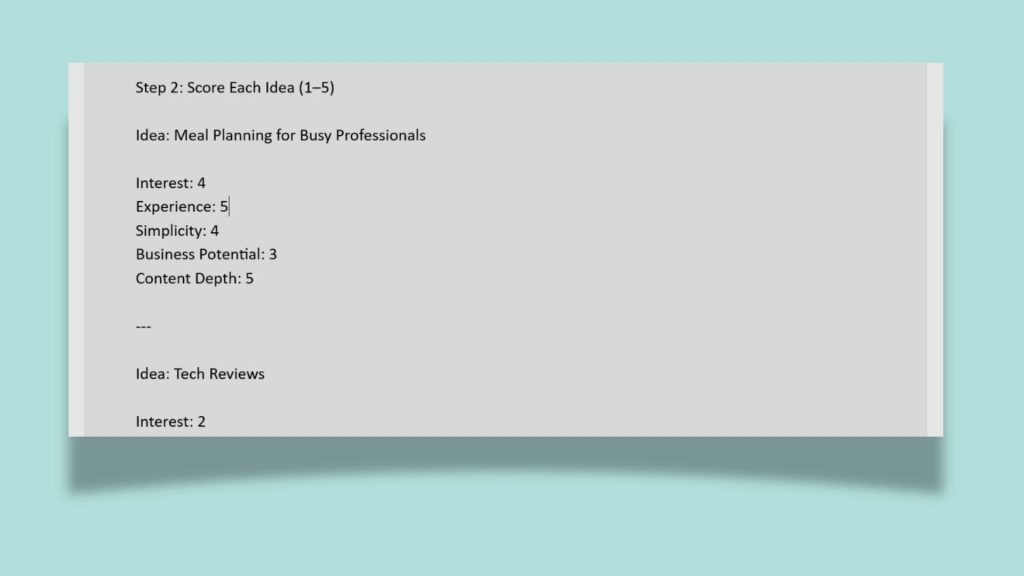
- Interest
- Experience
- Simplicity
- Business potential
- Content depth
Step 3: Eliminate Weak Fits
Remove ideas that:
- Sound profitable but don’t interest you
- Have no clear monetization path
- Feel too limited for long-term content
Step 4: Test Your Top 2
Write 10 content ideas for each.
If one flows easily and the other feels forced, you’ve got your answer! Easy as pie.
Frequently Asked Questions
Is it too late to start an online business after 40?
No. In fact, starting after 40 can be an advantage. You bring experience, perspective, and patience that most beginners are still developing.
I read somewhere that the average age of successful startup founders is – hold your breath – 45! Amazing, eh? And we think it’s more like 23. It’s not. Not if you’re counting only successful startups, not those that crashed and burned.
How do I stay consistent after choosing a niche?
This is where many people struggle. Choosing the right niche is only the beginning. Progress comes from showing up consistently over time. Some people manage this on their own, but many find it helpful to have some form of accountability, such as regular check-ins or external support, to stay on track.
If you’re looking for that kind of structure, I’ve outlined how my accountability approach works here.
How do I know if my niche is profitable?
A niche is profitable if people are already spending money in it. Look for existing products, services, or affiliate opportunities.
Can I change my niche later?
Yes, but it’s better to choose carefully upfront. Changing niches later can slow your progress and require rebuilding your content.
How long does it take to make money from a niche site?
Most niche sites take several months to a year to generate at least some meaningful income, depending on consistency and strategy. It’s not a quick way to make profits, generally speaking.
If you’ve gone through the above process and feel like you now have a decent niche idea, but you’re unsure whether you’ll actually follow through, this is exactly where a bit of accountability can help. Not strategy, not more information. . . just someone making sure you keep moving forward week after week.
If that sounds like what you need, you can check out my simple accountability setup here.
Final Thoughts: Choosing The Right Niche After 40
Choosing a niche after 40 is not about reinventing yourself overnight.
It’s about building from what you already know, while staying realistic about your time, energy, and goals.
You don’t need the perfect niche. You need a solid one. One that fits your life, respects your energy, and gives you room to grow.
Pick something steady and doable. That will take you further than something that only sounds impressive.