*This post may contain affiliate links for which I earn commissions.*
Starting an online business sounds exciting—right up until it starts to feel like another job squeezed into nights, weekends, and whatever scraps of time are left.
That’s where a lot of smart, capable people stall out.
They want extra income. More flexibility. Maybe even a path to something they actually own. But they don’t want to build a business that quietly drains the life out of them.
If you’re in your 40s, 50s, or beyond, that hesitation isn’t weakness—it’s experience talking. You don’t have endless hours to experiment, recover from bad advice, or chase every shiny new trend that pops up.
You want something practical. Affordable. Real.
You want progress without turning your calendar into a battlefield.
I’ve been on both sides of this when I started many years ago.
My first online business model was building niche content sites and monetizing them with affiliate products, later adding ads and sponsorships. Back then, most of the traffic came from Google. That worked—until it didn’t.
Traffic to individual sites would sometimes swing wildly based on algorithm changes. Having many sites across different niches did partially cushion the overall impact, though.
Some sites did well. Others slowly faded. But relying too much on one traffic source – Google – made the whole model very fragile.
And then there was the workload.
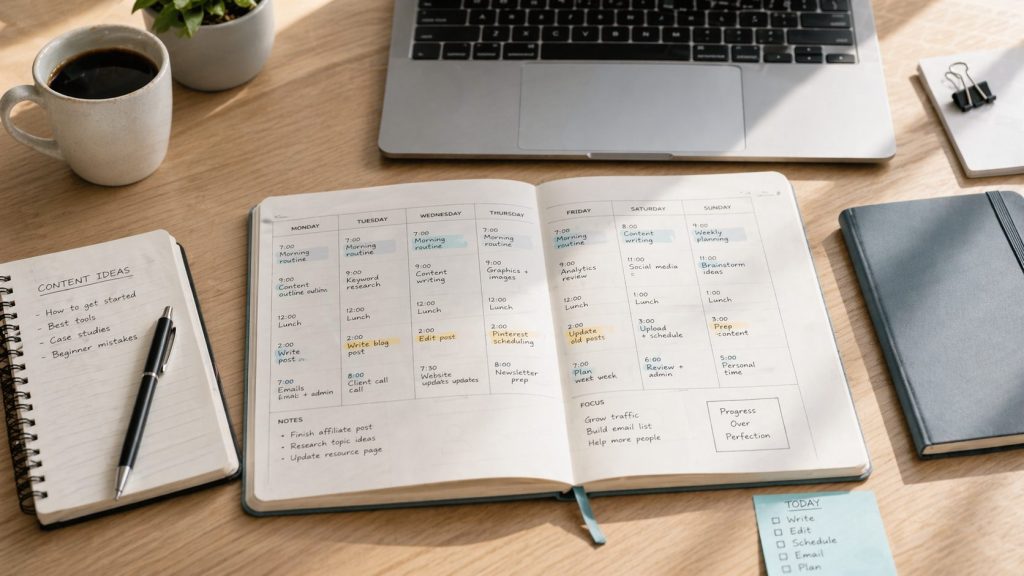
Content creation was a real grind. A second full-time job, actually. Writing day in and day out—often on topics I wasn’t even interested in—became draining. I did outsource some of it, which helped, but the pressure was still there.
That experience taught me something most beginners only learn the hard way: the “best” business model on paper can quietly become the wrong one in real life.
The good news? Your first online business model doesn’t need to be perfect. It just needs to fit your life, your energy, and the way you naturally work.
In this post, you’ll figure out how to compare a few beginner-friendly options, spot what fits, and get started without overwhelm creeping in.
Start With Your Real-Life Capacity, Not Just Income Goals
A common beginner mistake is choosing a business model based only on income potential. It sounds logical—but it often backfires.
A model that looks great on paper can turn into a slow grind if it demands constant client work, daily content, or a steep learning curve you don’t have time for.
A better starting point is your actual capacity.
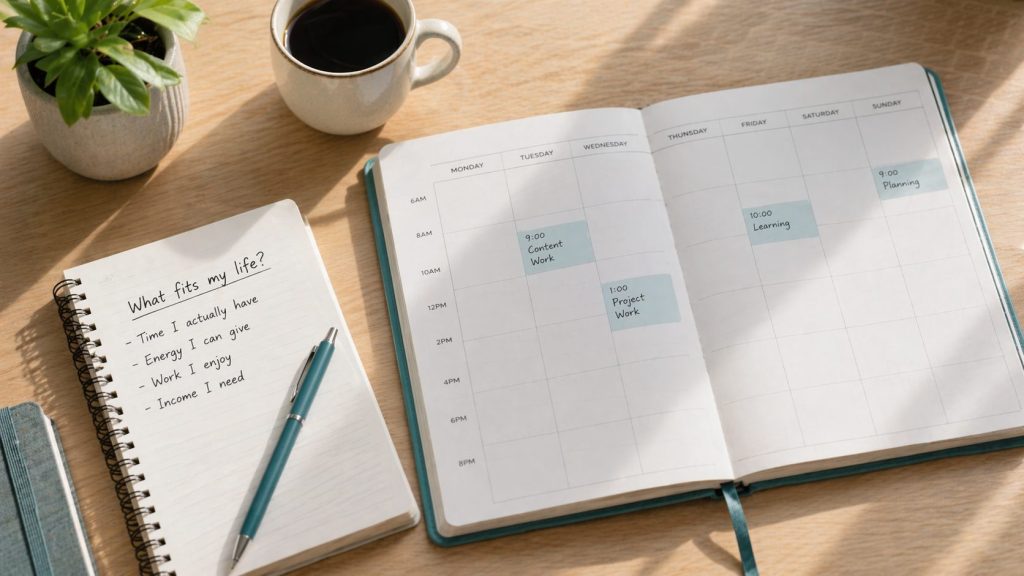
Ask yourself a few honest, no-escape questions:
- How many hours a week can I realistically give this?
- Do I want to create once and reuse it, or stay hands-on every day?
- Am I comfortable writing, teaching, recommending, or offering a service?
- Do I need income soon, or can I play the long game?
This matters more than people think. Different business models place very different demands on your time and energy.
Service-based work often brings in money faster. You’re helping someone directly—freelance writing, virtual assistance, Pinterest support, proofreading, or simple tech help.
The tradeoff? You’re selling time and attention. If you stop, the income usually stops too.
Affiliate content takes longer to build, but it can become more stable over time. You create helpful articles, reviews, or tutorials, and earn when someone buys through your link.
It’s slower at first. Often frustratingly slow. But done right, it doesn’t demand constant effort forever.
Digital products sit somewhere in the middle. A checklist, template, or mini guide can become a useful asset—but only if you resist the urge to overbuild.
Newsletters are one of the simplest ways to start. You show up consistently, build trust, and over time, that trust can support multiple income streams.
The best first choice isn’t the fanciest option. It’s the one you won’t quietly abandon after two weeks.
Compare The Four Easiest Starting Points
Here’s a clear, no-fluff look at four beginner-friendly models.
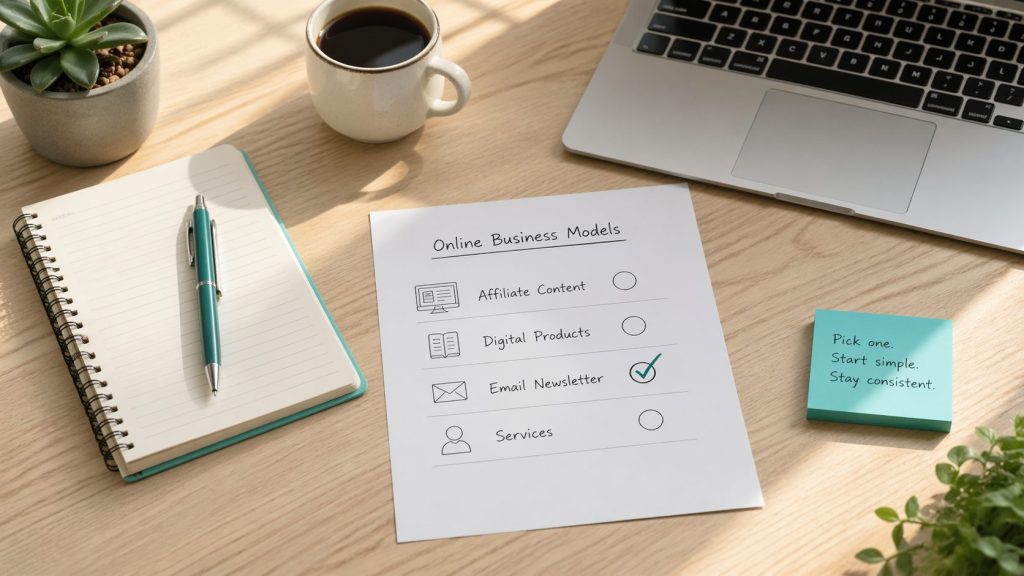
Affiliate Content
Best if you enjoy explaining things, sharing tools, and helping people make decisions.
Why it works:
- Low startup cost
- No product creation upfront
- Works well with blogs and email
Watch out for:
- Slow traction in the beginning
- Requires consistency
- Thin content gets ignored
This model becomes much stronger when paired with an email list, so you’re not relying on one traffic source alone.
Digital Products
Think simple tools: templates, checklists, guides, or planners.
Why it works:
- Create once, sell multiple times
- Low overhead
- Builds confidence quickly
Watch out for:
- Overbuilding (this traps a lot of beginners)
- Creating before validating demand
- Trying to solve too many problems at once
Simple sells. Complicated gets postponed indefinitely.
Newsletters
A clean, focused way to start. Just you, your ideas, and your reader.

Why it works:
- Simple setup
- Builds trust quickly
- Supports affiliate offers and products later
Watch out for:
- Slow growth in the beginning
- Needs a clear focus
- Consistency matters more than cleverness
This pairs naturally with affiliate content if you enjoy writing but don’t want to publish endlessly.
Service-Based Starting Points
The fastest way to get traction. No audience required—just a useful skill.
Why it works:
- Quicker path to income
- Easy to test demand
- Builds real-world experience fast
Watch out for:
- Time-for-money trade
- Can feel like a treadmill
- Needs boundaries
This is a strong starting point if you want momentum quickly.
Match The Model To Your Personality And Season Of Life
This is where many beginners trip up.
They pick something that looks good online—but doesn’t fit how they actually like to work.
That mismatch leads to frustration. Then comes the next shiny option. Then another. Nothing sticks long enough to work.
(If staying consistent is where things tend to fall apart, a simple layer of accountability can make a big difference. That’s exactly what this 30-day accountability setup is designed for—effective support to help you follow through without adding more complexity.)
I’ve seen this pattern over and over.
A better approach:
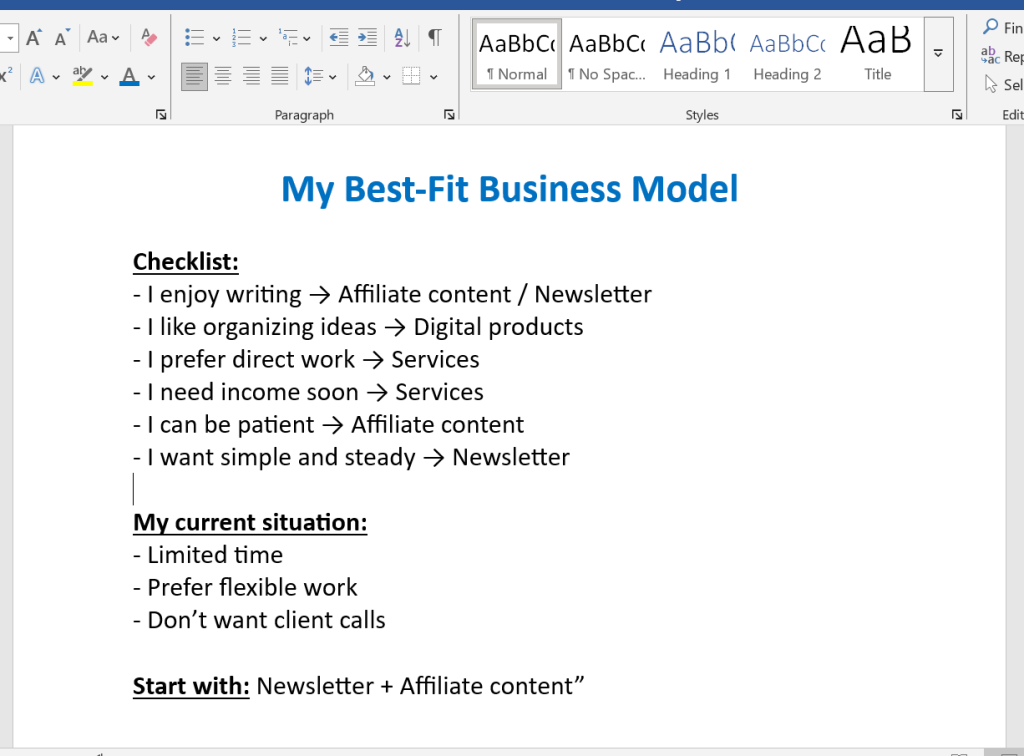
- Affiliate content: If you like writing and can be patient
- Digital products: If you like organizing ideas
- Newsletters: If you enjoy steady communication
- Services: If you want quicker income
Also factor in your current life situation. Busy schedule? Family responsibilities? Limited energy?
Simpler is usually smarter.
Many sustainable businesses evolve gradually—services for cash flow, then a newsletter, then affiliate content, then a product.
That path works because it’s realistic.
Use A Simple Decision Framework Before You Commit
When things feel unclear, it’s easy to stay stuck in research mode.
Use this instead:
- Fits my schedule
- Matches how I like to work
- Low startup cost
- Simple enough to start now
- Can grow later
- Doesn’t require constant attention
- Solves a real problem
Score each option. Then choose.
Not perfectly. Just decisively.
Practical Steps To Start This Week
- Pick one model
- Choose one audience
- Identify one problem
- Create one simple solution
- Block 2–3 short work sessions
- Ignore everything else for 30 days
In reality, it’s easy to skip those 2-3 short work sessions once the week gets busy. That’s why having someone keep you gently on track can help. This simple accountability setup is built for exactly that—consistent follow-through without pressure or overwhelm.
The accountability handholding helps a lot with the last step – ignoring everything else, all other shiny objects. This last step is what most people skip.
Focus is what turns effort into results.
Your first goal isn’t income. It’s momentum.
Three posts. One product. Four emails. One offer.
That’s how this actually begins.
Pick Something You Can Stick With
This isn’t about finding the perfect model.
It’s about choosing something that fits your life well enough that you keep going.
If you don’t want a second full-time job, don’t build one by accident.
Start simple. Stay focused. Adjust as you go.
That’s how something small turns into something solid.
Note: If you already know what you want to do but struggle to stay consistent, having a small layer of accountability can make all the difference.
This 30-day accountability setup is built to help you follow through—without pressure, overwhelm, or complicated systems.