

*This post may contain affiliate links for which I earn commissions.*
Trying to build a business when your life is already full can feel like trying to grow a garden in a hallway closet!
There is never enough space, never enough time, and rarely a perfect moment to begin. If you are balancing work, family, errands, aging parents, or just the mental load of adult life, it can be easy to assume consistency is only for people with wide-open schedules.
That’s simply not true, fortunately.
The truth is that many people building practical online businesses are doing it in small pockets of time. For instance, they are working before breakfast, during lunch breaks, after the house gets quiet, or in the 20 minutes between one responsibility and the next.
But can that kind of schedule produce real progress? The answer is absolutely YES.
That’s exactly how I build my businesses even today. Over the years, I came across a few easy practices that can convert even a fragmented schedule into a solid business, one task at a time.
In this post, I’ll share those practices with you. I didn’t invent them of course, I merely adapted what effective entrepreneurs and executives were already doing.
You will learn how to stay consistent even when your time is limited and unpredictable. More importantly, you will see how to build a routine that fits your actual life. And not some ideal version of it.
Stop Waiting For Big Blocks Of Time
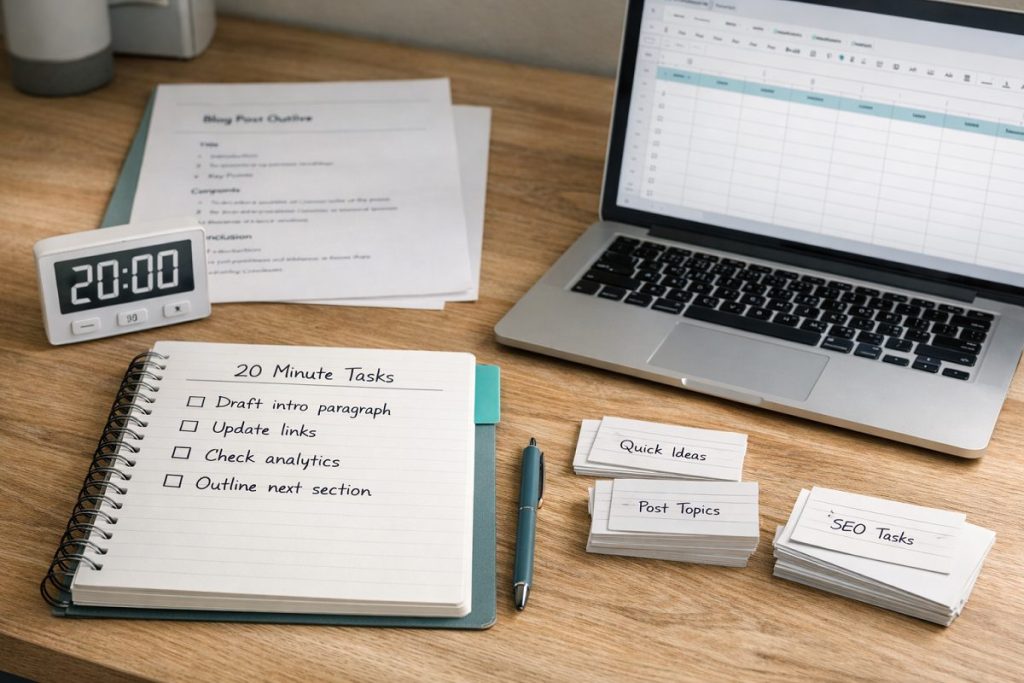
One of the biggest consistency traps is believing you need long, uninterrupted work sessions to make meaningful progress.
That would’ve been awesome, of course. Most of us would love a clean three-hour stretch with coffee, focus, and no interruptions. But for many midlife beginners, that is just not realistic most days.
If you keep waiting for the perfect window, you may end up doing very little. (I made that mistake lots of times in my journey. . .)
A better approach is to respect short work sessions. Thirty minutes counts. Fifteen minutes counts. Even ten focused minutes can move something forward if you know what you are there to do.
A business is not built in one heroic weekend. It is built through repeated small actions.
If you want a deeper understanding of how small actions compound over time, I found Atomic Habits by James Clear incredibly practical and easy to apply. . . especially when you’re working in short bursts like this. (In fact, I’m re-reading the book as of this writing.) You can check it out by clicking on the image below:


This mindset shift matters because it removes the guilt that often comes with a busy schedule. Instead of thinking, “I only had 20 minutes, so why bother,” you start asking, “What is the best use of the 20 minutes I have?” That question changes everything.
For example, in a short session you might:
- Outline a blog post
- Write product notes for an affiliate review
- Draft three email subject lines
- Organize content ideas in a notes app
- Update one section of a digital product
- Research one tool you may want to recommend later
Small tasks may not feel dramatic, but they stack up quickly. That is how consistency starts to feel possible. That’s how your business gains momentum, one easy step at a time.
Build A Tiny Weekly System
When life is busy, motivation is unreliable. A simple system works better.
Instead of deciding from scratch every day what to do, create a very small weekly rhythm. It does not need to be fancy. In fact, the simpler it is, the more likely you are to follow it. Think of it as reducing the number of decisions your tired brain has to make.
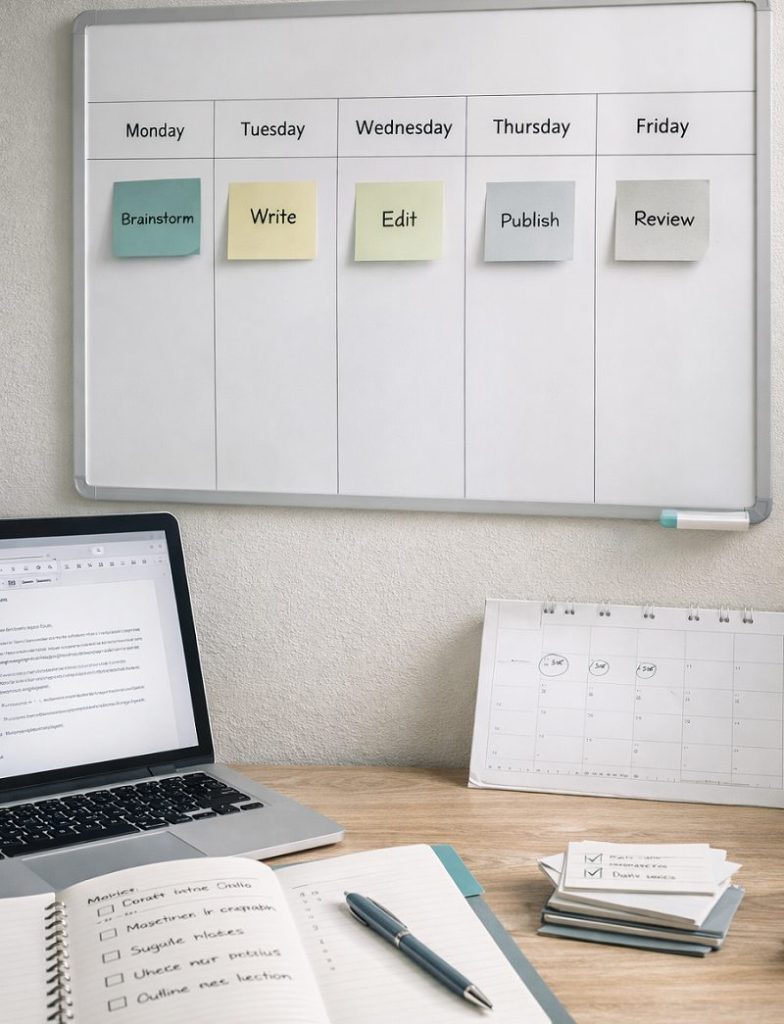
You might choose a structure like this:
- Monday: brainstorm or plan content
- Tuesday: write one section of a post or product
- Wednesday: edit or format
- Thursday: publish, post, or schedule
- Friday: review what worked and set up next week
If you prefer writing things down instead of using apps, a simple weekly planner can make this system much easier to follow. Something like a minimalist undated planner works well because you can start anytime and keep it flexible. Here’s one you can use: Clever Fox Planner.
That may not happen perfectly every week, and that is fine. The point is to give yourself a default pattern. When time opens up, you already know what kind of task belongs there.
Here’s what most people don’t understand. . . even if you accomplish just 30% of what you set out to do, if you keep that up week after week after week, you will end up making solid progress in a few months.
This is especially helpful if you are building a business around affiliate marketing, simple digital products, or content creation. Those models reward steady output over time. A small repeatable system keeps you moving without the pressure of needing to “do it all” every time you sit down.
You can make this even easier by keeping a running list of “10-minute tasks,” “30-minute tasks,” and “1-hour tasks.” Then when a window opens, you can match the task to the time instead of wasting half your energy trying to decide where to start.
Choose Fewer Priorities So You Can Finish More
A lot of inconsistency is not really a time problem. It is a focus problem.
When you are new, it is easy to scatter your energy across too many things. One day you are researching affiliate programs. The next day you are designing a logo.
Then you are watching videos about email funnels, rewriting your homepage, and wondering if you should start a YouTube channel too. It feels productive, but often it is just motion without traction.
Consistency gets easier when you narrow your focus.
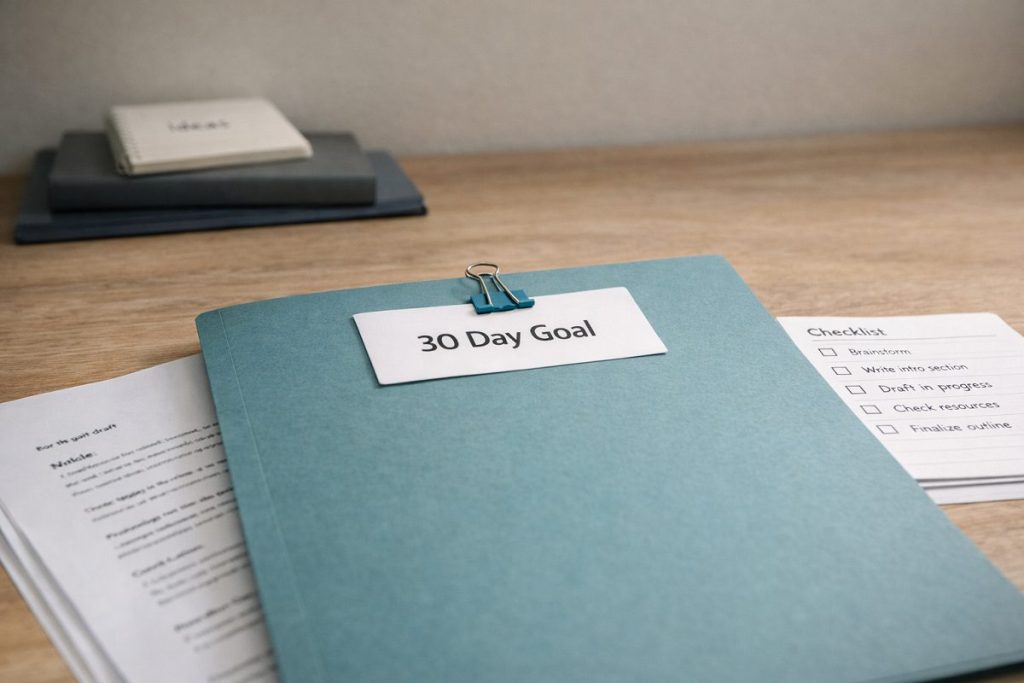
Pick one main project for this season. That might be starting your blog, creating your first lead magnet, writing five useful articles, or setting up the basic pages on your site. Let that be the priority until it is complete or at least stable enough to support the next step.
This does two helpful things. First, it reduces overwhelm. Second, it lets you see progress more clearly. Seeing progress is motivating, especially when you are working in small bursts.
A useful question to ask is this: “What is the one thing that would make everything else easier right now?” Start there.
That exact idea is explored beautifully in The One Thing by Gary Keller. It’s a simple read, but it can really help you cut through overwhelm and focus on what actually moves the needle. You can take a look here: The One Thing.
For many beginners, that one thing is content. A simple, helpful post on your website can become the foundation for affiliate recommendations, email ideas, social posts, and future digital products. That is a much better use of limited time than chasing five strategies at once.
Make It Easier To Restart Every Time
Busy people get interrupted. That is normal.
The goal is not to create a flawless streak with no missed days. The goal is to make restarting so easy that a missed day does not turn into a missed month.
This is where many good intentions quietly fall apart. People assume they have “fallen off,” when really they just had a hard week.
A simple restart habit can save a lot of momentum.
Research has shown that the mental energy drain you experience when you have to make a decision is very real. The resulting decision fatigue – great or small – reduces the energy you have available to do the actual work.

Here’s a simple way to sidestep that issue and restart easily when you take a break.
Before you end each work session, leave yourself a clear note for next time. Write down the next step in plain language. Not “work on website.” That is too vague. Try something like “finish intro for blog post,” “add affiliate disclosure,” or “research two beginner email platforms.”
That one note removes friction. You are not returning to a blank page. You are returning to a clearly marked out path forward. That makes a world of difference.
It also helps to keep your business tools simple. A notebook, a Google Doc, a Trello board, or a basic task app is enough for most beginners. You do not need a complicated productivity setup to stay consistent. In many cases, too many tools become another form of procrastination.
One practical tool that fits naturally here is Monday.com. It is especially helpful for beginners who want a simple, visual system without unnecessary complexity. You can set up boards with groups like “Ideas,” “This Week,” “In Progress,” and “Done,” then move tasks along as you make progress. It works well for people who like seeing everything clearly laid out and need a reliable way to pick up where they left off, without having to rethink what to do next every single time.
A Simple Consistency Framework You Can Use This Week
Here is a practical process you can start using right away:
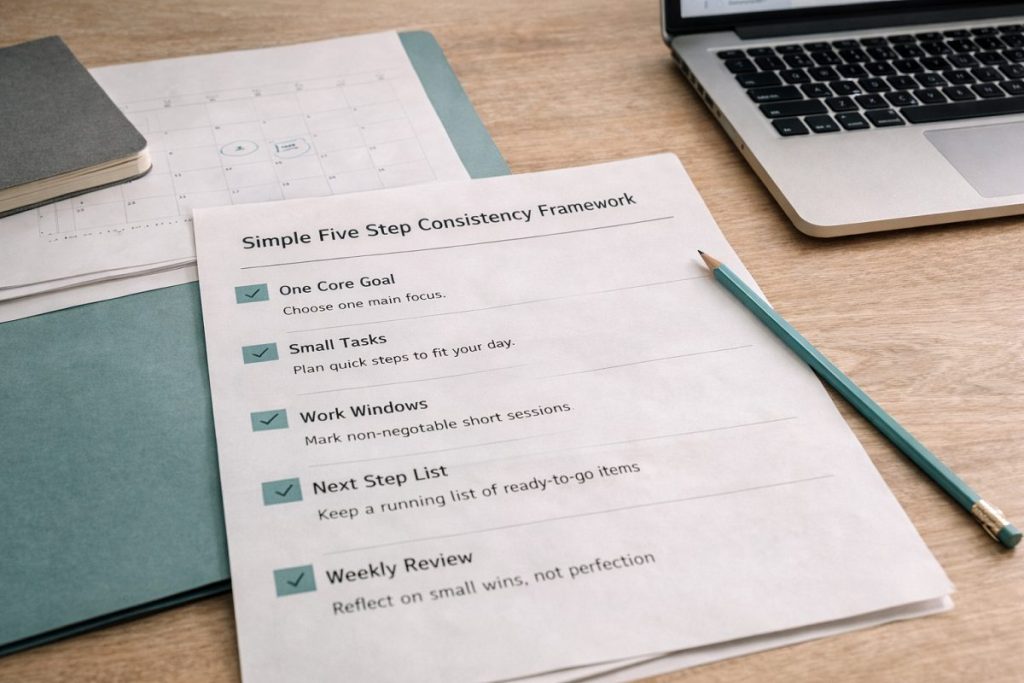
1. Pick One Core Goal
Choose one business goal for the next 30 days. Keep it narrow and realistic.
Examples:
- Publish 4 blog posts
- Set up your affiliate starter pages
- Create your first simple digital download
2. Break It Into Small Tasks
Turn that goal into pieces you can do in short windows of time.
Examples:
- Brainstorm post topics
- Write outlines
- Draft introductions
- Add links and images
- Edit one section
3. Schedule Two Or Three Work Windows
Do not aim for daily if your life does not support it. Start with two or three small sessions per week.
Examples:
- Tuesday lunch break
- Thursday evening for 30 minutes
- Sunday morning before the house wakes up
4. Keep A Running Next-Step List
At the end of every work session, write the exact next thing to do.
5. Track Wins, Not Perfection
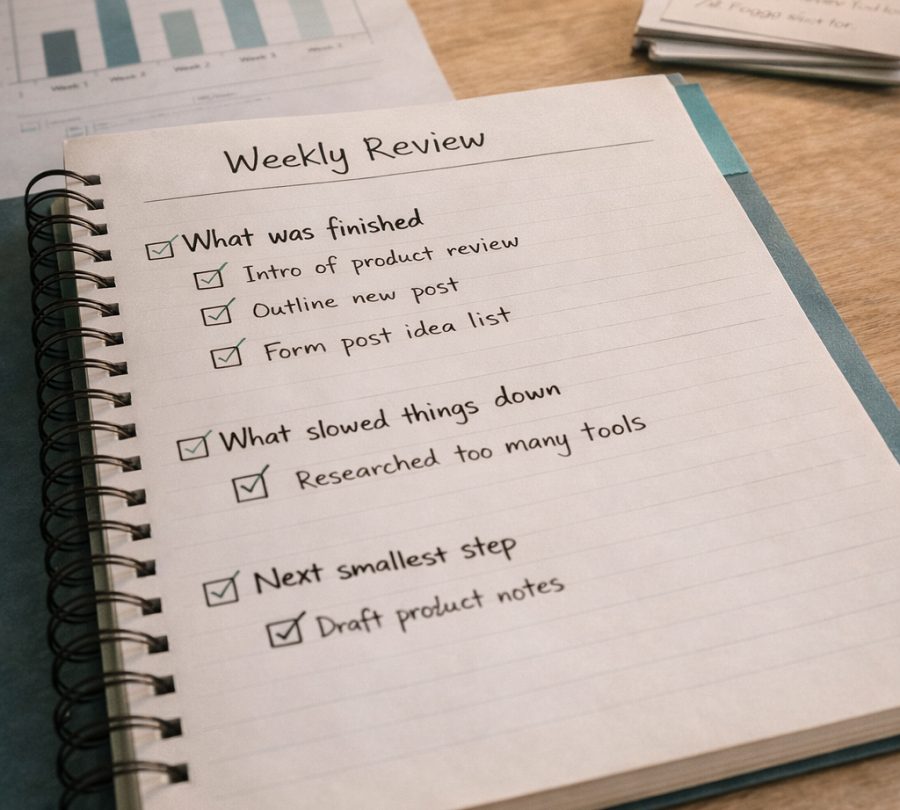
At the end of each week, ask:
- What did I finish?
- What slowed me down?
- What is the next smallest step?
That kind of review helps you adjust without beating yourself up.
Final Thoughts
Consistency does not mean doing a lot. It means returning to the work often enough that your business keeps moving. That may happen in short, uneven, imperfect stretches, and that is still real progress.
You do not need a clear calendar, endless energy, or a perfectly organized plan to get started. Almost no one has that sort of luxury.
You need a simple approach, a realistic pace, and the willingness to keep showing up when you can. Over time, those small efforts create something solid.
Starting smart is better than starting perfect.
And for a busy adult building a business in the middle of real life, smart usually looks a lot like steady, modest, consistent effort that builds momentum, even when it doesn’t feel like much right now.