
*This post may contain affiliate links for which I earn commissions.*
There were plenty of projects I started and later quit. Some I quit for the right reasons, some not.
Starting and quitting is pretty common in the online business space.
In fact, most people over 40 who are trying to build an online income carry a hidden worry: “What if I pick the wrong thing and waste months of my time?”
So when a project doesn’t work out, it can feel like proof that you’re behind everyone else.
Even worse, you conclude that you are just not cut out for this. Which is far from the truth.
I want to share a different perspective.
I’ll walk you through a small project I chose to quit later, why it felt uncomfortable at the time, and why it turned out to be one of the smartest decisions I made.
More importantly, I’ll show you how to recognize when it’s time to pivot, without guilt or second-guessing yourself.
Because quitting the right thing at the right time is not failure. It’s progress.
1. The Project That Looked Good on Paper

A while ago, I started an email list in a market that seemed like a safe bet.
The idea checked all the boxes:
- The audience was easy to reach both organically (search traffic, social) and via paid ads
- There were affiliate products I could promote and plenty of demand
- I had a certain level of knowledge of the market
- It didn’t require showing my face or building a personal brand
On paper, it made sense. And that’s often how many of us start. We choose something that feels logical and low-risk. And building an email list and marketing to that audience (a very sensible move in many markets) was a small, inherently limited risk thing anyway.
But here’s what I didn’t pay enough attention to.
I wasn’t genuinely interested in the topic. I didn’t dislike it, but I didn’t feel any pull towards it either.
Creating lead magnets and writing regular emails felt like a chore. Research took longer than it should have. And every time I sat down to work on it, I found reasons to delay.
At first, I told myself this was normal. “It just needs a bit of discipline,” I thought. “Keep going.”
And yes, consistency DOES matter, a lot. But there’s a difference between pushing through resistance and forcing yourself into something that doesn’t quite fit you.
2. The Warning Signs I Ignored
Looking back, the signs were obvious.
Here’s what I noticed, and what you should watch for in your own projects:
You keep procrastinating on simple tasks
Not because you’re busy, but because you don’t feel connected to the work. The whole market or idea or business model just doesn’t “vibe” with you mentally.
You’re always looking for a “better idea”
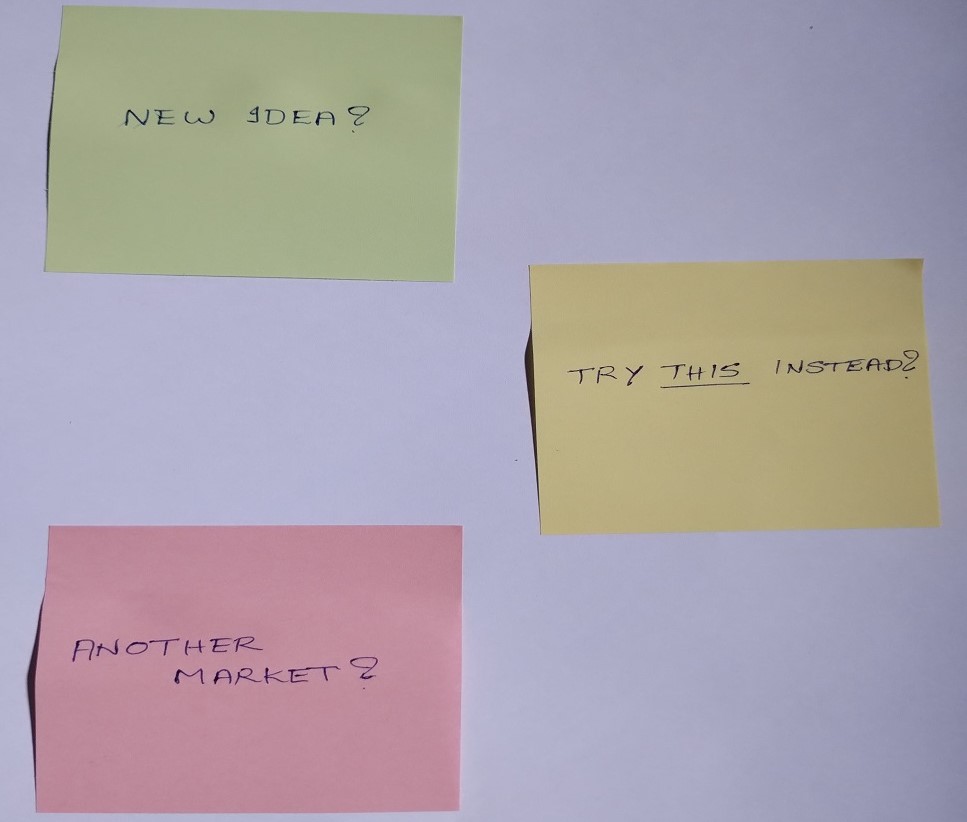
You start browsing YouTube or blogs, hoping something else will feel more exciting.
While most folks running online businesses tend to do this to some degree, if that behavior becomes a barrier to moving forward on your existing project, you need to pay attention to what’s really going on.
Progress feels slow and heavy
Even small wins don’t feel rewarding as they should, if you were really “into” the work.
You avoid talking about your project
Because deep down, you’re not proud of it or invested in it.
Now, none of these necessarily mean you’re lazy or undisciplined.
Instead, they often mean you’ve chosen a path that doesn’t match your interests, strengths, or lifestyle.
For many midlife beginners, this happens because we’re trying to “do what works” or what we heard someone talk about, instead of asking what works for us.
3. The Moment I Decided to Quit
The turning point wasn’t dramatic.
There was no big failure or sudden loss. Quite the opposite. The whole project was actually starting to gain some traction and had gone beyond breakeven.
But I realized something important. . . I didn’t want to keep doing it.
Even if it succeeded, I couldn’t see myself continuing on this path long-term. And that question changed everything:
“If this works, do I actually want the life or the work that comes with it?”
For the first time, I gave myself permission to answer honestly.
And the answer was NO.
That’s when I decided to stop.
Not because it failed, but because it DIDN’T FIT ME.
4. Why Quitting Was the Smart Move
At first, quitting felt uncomfortable.
There’s always that voice that says:
- “You should have stuck it out”
- “Maybe you just needed more time”
- “Now you’ve wasted your effort – everything you did so far now goes down the drain”
But here’s what actually happened after I quit:
I freed up time and mental energy
Instead of dragging myself through work I didn’t enjoy, I could focus on something more aligned.
I got clearer about what I wanted
The experience helped me understand what DIDN’T suit me, which made my next decision easier.
I moved faster on the right path
Because I wasn’t forcing progress anymore, I was able to build momentum quickly in a direction that felt natural.
Quitting didn’t set me back. It redirected me.
And for beginners, especially those balancing work and family, that kind of clarity is incredibly valuable.
Practical Framework: How to Decide Whether to Continue or Pivot
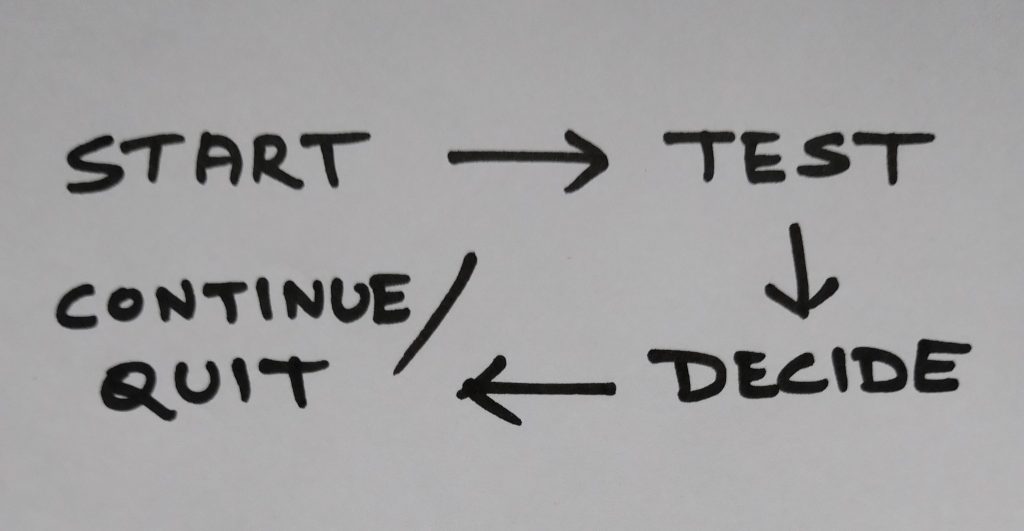
If you’re currently working on something and feeling unsure, here’s a simple framework you can use.
Step 1: Ask the “Future Test” question
If this project succeeds, will you enjoy maintaining it for the next 2 to 3 years?
If the answer is no, pay attention to that.
Step 2: Check Your Energy, Not Just Results
Are you consistently drained when working on it, or do you feel engaged and curious?
Energy is a better long-term indicator than short-term results.
Step 3: Look at Your Consistency
Are you avoiding the work even when you have time?
That’s often a sign of misalignment, not lack of discipline.
Step 4: Give It a Fair Trial
Before quitting, commit to a clear test period. For example:
- If running a blog, publish 30 blog posts and 30 guest posts / social media mentions of your content
- If building a list, get 200 people on your list and send at least 50 emails
- Work consistently for 60 – 90 days or more, if necessary
Then see how the whole thing looks and feels to you, keeping the earlier criteria in mind.
This helps you avoid quitting too early, which can be a mistake too.
Step 5: Make a Clean Decision

After your test period, decide:
- Continue and commit fully
- Or stop and move on without guilt
Avoid staying in the middle. That’s where time gets wasted.
Tools That Can Help You Test Ideas Faster
One reason people stick with the wrong project is that they’ve invested too much time setting it up.
You can avoid that by using simple tools that let you test ideas quickly.
For example:
- An email platform like Aweber lets you start building an audience without a full website. You can validate interest before committing long-term.
- A beginner-friendly website builder like Bluehost helps you get a basic site live without technical stress.
- AI writing tools like ChatGPT can help you generate content ideas and outlines so you can focus on testing instead of overthinking.
The goal isn’t to build something perfect. It’s to learn quickly what works for you.
If you take one thing from this story, let it be this:
You are allowed to change direction.
Quitting a project doesn’t mean you failed. It often means you learned something valuable about yourself, your preferences, and your path forward. That’s incredibly useful information.
The real mistake isn’t quitting.
It’s staying stuck in something that doesn’t fit, just because you’ve already started.
Starting smart isn’t about getting everything right the first time. It’s about adjusting as you go, with honesty and intention.
And every time you do that, you move closer to something that truly works for you.