*This post may contain affiliate links for which I earn commissions.*
So, you are midcareer and want to start an online business.
Maybe you want an extra source of income in these uncertain times, some extra cash to splurge on vacations, or even want to create an online empire.
Whatever your reason, that’s awesome!
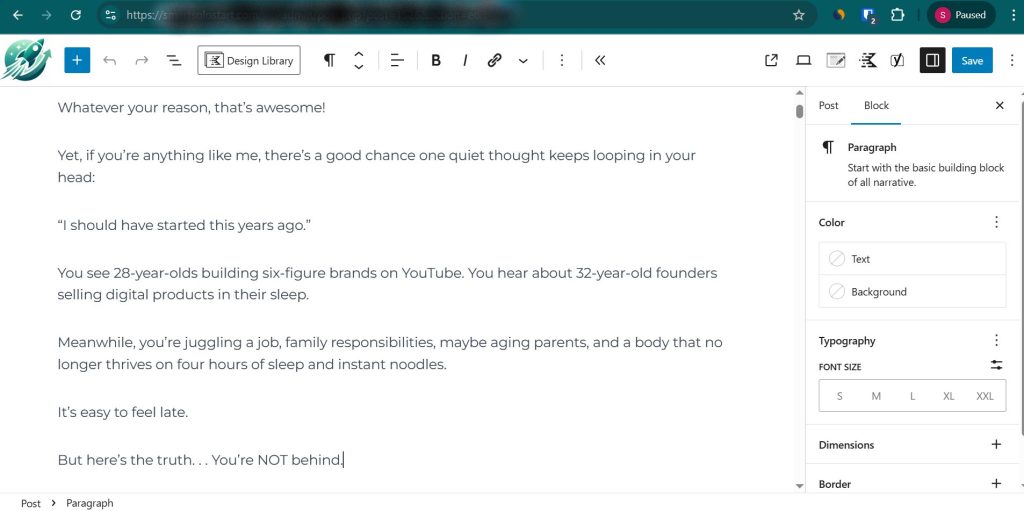
Yet, if you’re anything like me, there’s a good chance one quiet thought keeps looping in your head:
“I should have started this years ago.”
You see 28-year-olds building six-figure brands on YouTube. You hear about 32-year-old founders selling digital products in their sleep.
Meanwhile, you’re juggling a job, family responsibilities, maybe aging parents, and a body that no longer thrives on four hours of sleep and instant noodles.
It’s easy to feel late.
But here’s the truth. . . You’re NOT behind.

You’re just starting from a different place. A place that’s actually stronger than you think.
In this post, I want to give you a practical reset. Not empty motivation fluff. And definitely not hustle culture advice.
Just a grounded way to approach building an online business after 40 that actually fits your life.
Stop Comparing Your Starting Line to Someone Else’s Middle
Here’s something to remember – most of what you see online is not someone’s beginning. Not at all.
It’s more like their edited highlight reel.
That blogger who seems “overnight successful” likely spent five years learning SEO, testing offers, and building an email list before anyone noticed.
And that young YouTuber probably filmed 50 awkward videos before leveling up to make high-quality, slick-looking videos. And then spent still more time producing content before her channel finally took off.
When you’re in your 40s or 50s, comparison hits harder because you are more aware of time. After all, you think in terms of decades, not semesters!
Here’s the mindset shift that matters:
You are not competing with 25-year-olds.
You are building a second act.
You bring real-world experience. You understand customers because you have been one for decades.
You have professional skills, recognize patterns others struggle to see, and emotional maturity that’s way beyond that of most folks under 35. Those things are not flashy, but they are powerful.
Instead of asking, “Why didn’t I start earlier?” ask a different question. . .
“What do I know now that I didn’t at 25?”
You will discover that that question changes everything.
Choose Practical Over Trendy
One of the biggest traps for beginners is chasing whatever is hot right now.
Crypto last year. AI automation today. Some new platform tomorrow.
When you’re building your first online business after 40, your goal is not to catch every wave. Your goal is stability and simplicity.
Start with business models that are proven and manageable:
- Affiliate marketing with helpful content
- A small digital product based on your expertise
- A simple email newsletter around a focused topic
- A niche website reviewing practical tools or products
You do not need to become a TikTok star. You do not need 100,000 followers. You need a clear audience and a compelling offer.
For most midlife beginners, I recommend this simple structure:
- A basic website
- An email list
- Helpful content that solves real problems
- One or two monetization methods, not ten
Tools like WordPress with a clean theme, or beginner-friendly builders such as Squarespace, can help you get started without tech overwhelm. For email marketing, something simple like Kit works well because it is built for creators and is easy to learn.
You certainly don’t need to master every tool out there. You just need to choose a few and actually use them.
Redefine What “Fast” Means at This Stage of Life
In your 20s, “fast” might mean 80-hour work weeks and constant experimentation.
In your 40s, “fast” should mean focused.
If you have a full-time job and family responsibilities, you may realistically have 5 to 10 hours per week for your online business. That is enough, but only if you use it wisely.
Here is what fast looks like now:
- One niche, not five
- One platform, not every platform
- One primary income strategy, not a dozen side experiments
For example, instead of saying, “I’m starting an online business,” get specific:
“I’m building a niche website reviewing home office gear for remote workers over 40.”
Or:
“I’m creating a weekly email newsletter for midlife professionals who want to start side income projects.”
Specificity reduces overwhelm. It also speeds up learning because you are not scattering your energy.
You are not behind. You are just operating with tighter constraints. And when you embrace constraints you create focus, which in turn creates clarity.
Build Confidence Through Small Wins
Confidence does not come from reading more blogs. It comes from shipping.
Your first blog post will feel awkward.
Your first email will feel underwhelming.
Your first affiliate link may earn $3.
That $3 matters.
It proves that this works.
Years ago, my first affiliate commission was a majestic $2.45 for a baby product! I still remember the feeling it gave me that YES, this whole online thing is somehow REAL. . . and that *I* could do it.
Instead of aiming for big outcomes in the beginning, aim for small proof points:
- Publish your first five posts
- Get your first 10 email subscribers
- Earn your first $1 online
- Get one genuine reply from a reader
I remember once when I had sent a mini-course via email to my small list (which had less than 200 people on it at the time). And a week later, someone replied and said, “Great info & strategy, very useful! Thanks!”
That was real. And I felt great!
That’s how you build belief – brick by brick.


Atomic Habits by James Clear explains how small daily actions can compound into remarkable results over time. If you’re starting an online business later in life, this book offers a practical framework for building the consistent habits that make long-term progress possible.
A Simple 30-Day Reset Plan
If you feel scattered or stuck, just use this 30-day reset to move forward calmly and clearly.
Week 1: Clarify and Simplify
- Choose one audience you understand well
- Write down 10 problems they struggle with
- Pick one main business model to start with
- Choose your core tools and stop researching alternatives
Week 2: Set Up Your Foundation

- Buy a domain name
- Set up a simple website with an About page and one blog post
- Create an email account with a tool like Kit or MailerLite
- Add a simple opt-in form, even if it is just “Join my weekly tips”
Week 3: Create and Publish
- Write 2 to 3 helpful, practical blog posts
- Share them with a small circle – not the whole internet
- Join one relevant online community and observe before posting
Week 4: Reflect and Adjust
- What felt easy?
- What felt confusing?
- What questions did people ask?
- What small results did you see?
At the end of 30 days, you will not be “successful.”
But you will be in motion.
And motion changes how you see yourself.
Smart Tool Suggestions for Beginners
You do not need a tech stack with 15 subscriptions. Start lean.
Here are a few categories worth considering:
- Web hosting: Bluehost is one of the easiest platforms for beginners to set up a WordPress site.
- Website platform: WordPress if you want flexibility, Squarespace if you want simplicity. I’ve used WordPress for years and still do.
- Email marketing: Kit or MailerLite for clean automation and ease of use.
- Planning: A simple digital planner, Notion workspace, or even a well-designed paper planner. Clarity beats complexity.
- AI support: Tools like Claude can help you outline posts, brainstorm ideas, or clarify your thinking, but do not let them replace your voice.
Want a tip that will save you a truckload of money?
Here it is. . .
Only invest in tools that solve a CURRENT problem. Not a future one.
This way, you can avoid falling for every new, flashy “must-have” tool promoted online.
Remember. . .
You are not behind.
You are starting with experience, perspective, and a deeper understanding of what actually matters in life.
That’s a huge advantage.
Your online business does not need to be loud. It does not need to be viral. It needs to be useful, consistent, and preferably drawn from your real-world experiences.
Start small. Start focused.
Starting smart is better than starting perfect.
Next Step
If this post resonated with you, consider joining the Smart Solo Start email list. I share practical, no-hype lessons on building simple online income streams without tech overwhelm.